Buy megachecker.net ?
We are moving the project
megachecker.net .
Are you interested in purchasing the domain
megachecker.net ?
domain@kv-gmbh.de · 0541-91531010
Buy megachecker.net ?
Why is the formula for copper nitrate Cu(NO3)2 and not Cu(NO3)3?
The formula for copper nitrate is Cu(NO3)2 because copper has a +2 oxidation state, meaning it can form a compound with two nitrate ions. Each nitrate ion (NO3-) carries a -1 charge, so two nitrate ions are needed to balance the +2 charge of copper. Therefore, the correct formula for copper nitrate is Cu(NO3)2. **
What does cu mean?
Cu is the chemical symbol for the element copper. It is a transition metal with a reddish-orange color and is known for its high thermal and electrical conductivity. Copper is commonly used in electrical wiring, plumbing, and as a component in various alloys. **


Similar search terms for Ifigen-Manganese-Copper-Mn-Cu-Trace
Top-Angebote
Products related to Ifigen-Manganese-Copper-Mn-Cu-Trace:

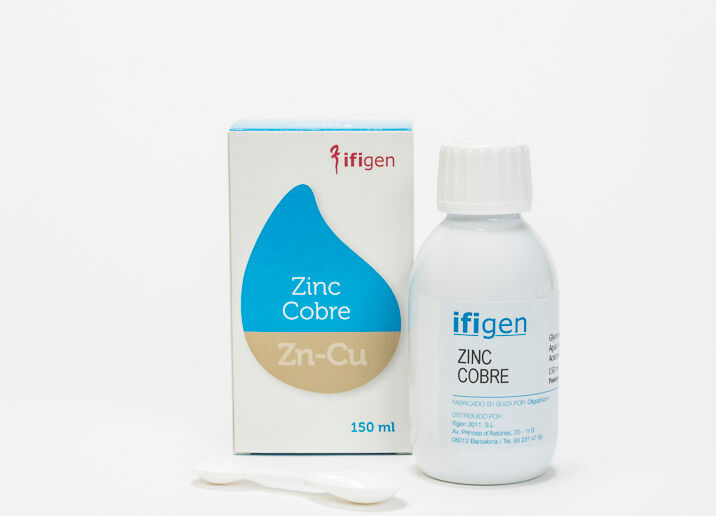


-
What length does a 723 ohm copper (Cu) resistor with a cross-sectional area of 1 mm² have?
The length of the copper resistor can be calculated using the formula for resistance: R = ρ * (L/A), where R is the resistance, ρ is the resistivity of copper, L is the length, and A is the cross-sectional area. Rearranging the formula to solve for L, we get L = (R * A) / ρ. Plugging in the given values, we get L = (723 ohms * 1 mm²) / (1.68 x 10^-8 ohm*m) ≈ 4.3 x 10^4 mm or 43 meters. Therefore, the length of the copper resistor is approximately 43 meters. **
-
What is the relationship between mn and 1n?
The relationship between mn and 1n is that they are both expressions involving the same variable, n. The expression mn represents the product of m and n, while 1n represents the product of 1 and n, which is simply n. In other words, mn and 1n both involve multiplying a number by n, but in the case of 1n, the number being multiplied is 1. **
-
What is the resistance value of a 3536 m long copper conductor (Cu) with a cross-section of 6 mm?
The resistance value of a copper conductor can be calculated using the formula: R = ρ * (L/A), where R is the resistance, ρ is the resistivity of copper (1.68 x 10^-8 Ωm), L is the length of the conductor, and A is the cross-sectional area. Plugging in the given values, we get R = (1.68 x 10^-8 Ωm) * (3536 m / (6 x 10^-3 m)^2) = 0.98 Ω. Therefore, the resistance value of the 3536 m long copper conductor with a cross-section of 6 mm is 0.98 Ω. **
-
What is the difference between NM and MN databases?
NM (National Master) databases are typically used for storing and managing data related to national entities, such as companies, organizations, or individuals. On the other hand, MN (Master National) databases are used for storing and managing data related to national entities, such as companies, organizations, or individuals. The main difference between the two lies in the naming convention used for the databases, with NM databases using the abbreviation for National Master and MN databases using the abbreviation for Master National. Both types of databases serve similar purposes in terms of data management and storage. **


Are manganese ions pink or colorless?
Manganese ions are typically colorless in aqueous solutions. However, in certain cases, manganese ions can exhibit a pink color when they form complexes with other ligands. This pink color is due to the absorption of certain wavelengths of light by the complex formed between manganese ions and the ligands. **
What is the mass of manganese?
The mass of manganese is approximately 54.94 atomic mass units (amu). This is the average atomic mass of a manganese atom, taking into account the different isotopes of manganese and their relative abundance. Manganese is a transition metal with the atomic number 25, and it is commonly used in steel production, batteries, and other industrial applications. **
Top-Angebote
Products related to Ifigen-Manganese-Copper-Mn-Cu-Trace:
-
Why is the formula for copper nitrate Cu(NO3)2 and not Cu(NO3)3?
The formula for copper nitrate is Cu(NO3)2 because copper has a +2 oxidation state, meaning it can form a compound with two nitrate ions. Each nitrate ion (NO3-) carries a -1 charge, so two nitrate ions are needed to balance the +2 charge of copper. Therefore, the correct formula for copper nitrate is Cu(NO3)2. **
-
What does cu mean?
Cu is the chemical symbol for the element copper. It is a transition metal with a reddish-orange color and is known for its high thermal and electrical conductivity. Copper is commonly used in electrical wiring, plumbing, and as a component in various alloys. **
-
What length does a 723 ohm copper (Cu) resistor with a cross-sectional area of 1 mm² have?
The length of the copper resistor can be calculated using the formula for resistance: R = ρ * (L/A), where R is the resistance, ρ is the resistivity of copper, L is the length, and A is the cross-sectional area. Rearranging the formula to solve for L, we get L = (R * A) / ρ. Plugging in the given values, we get L = (723 ohms * 1 mm²) / (1.68 x 10^-8 ohm*m) ≈ 4.3 x 10^4 mm or 43 meters. Therefore, the length of the copper resistor is approximately 43 meters. **
-
What is the relationship between mn and 1n?
The relationship between mn and 1n is that they are both expressions involving the same variable, n. The expression mn represents the product of m and n, while 1n represents the product of 1 and n, which is simply n. In other words, mn and 1n both involve multiplying a number by n, but in the case of 1n, the number being multiplied is 1. **
Similar search terms for Ifigen-Manganese-Copper-Mn-Cu-Trace
-
What is the resistance value of a 3536 m long copper conductor (Cu) with a cross-section of 6 mm?
The resistance value of a copper conductor can be calculated using the formula: R = ρ * (L/A), where R is the resistance, ρ is the resistivity of copper (1.68 x 10^-8 Ωm), L is the length of the conductor, and A is the cross-sectional area. Plugging in the given values, we get R = (1.68 x 10^-8 Ωm) * (3536 m / (6 x 10^-3 m)^2) = 0.98 Ω. Therefore, the resistance value of the 3536 m long copper conductor with a cross-section of 6 mm is 0.98 Ω. **
-
What is the difference between NM and MN databases?
NM (National Master) databases are typically used for storing and managing data related to national entities, such as companies, organizations, or individuals. On the other hand, MN (Master National) databases are used for storing and managing data related to national entities, such as companies, organizations, or individuals. The main difference between the two lies in the naming convention used for the databases, with NM databases using the abbreviation for National Master and MN databases using the abbreviation for Master National. Both types of databases serve similar purposes in terms of data management and storage. **
-
Are manganese ions pink or colorless?
Manganese ions are typically colorless in aqueous solutions. However, in certain cases, manganese ions can exhibit a pink color when they form complexes with other ligands. This pink color is due to the absorption of certain wavelengths of light by the complex formed between manganese ions and the ligands. **
-
What is the mass of manganese?
The mass of manganese is approximately 54.94 atomic mass units (amu). This is the average atomic mass of a manganese atom, taking into account the different isotopes of manganese and their relative abundance. Manganese is a transition metal with the atomic number 25, and it is commonly used in steel production, batteries, and other industrial applications. **
* All prices are inclusive of VAT and, if applicable, plus shipping costs. The offer information is based on the details provided by the respective shop and is updated through automated processes. Real-time updates do not occur, so deviations can occur in individual cases. ** Note: Parts of this content were created by AI.