Buy megachecker.net ?
We are moving the project
megachecker.net .
Are you interested in purchasing the domain
megachecker.net ?
domain@kv-gmbh.de · 0541-91531010
Buy megachecker.net ?
What does isometry mean in art?
Isometry in art refers to the use of geometric shapes and forms that maintain their size and shape regardless of their position or orientation in space. This technique creates a sense of balance, harmony, and stability in the artwork. Isometric art often features precise, straight lines and angles, and is commonly used in architectural drawings, technical illustrations, and graphic design to convey a sense of accuracy and order. **
How is a standardized isometry correctly drawn?
A standardized isometry is correctly drawn by following specific guidelines. First, ensure that all three axes (x, y, z) are drawn at 120-degree angles to each other. Next, draw the object or shape in question with accurate proportions and angles, making sure to maintain the 120-degree relationship between the axes. Finally, label the axes and any important points or dimensions to clearly communicate the isometric view. By following these steps, a standardized isometry can be accurately and effectively drawn. **

Similar search terms for Isometry
Top-Angebote
Products related to Isometry:
-
AMiO 04505 Inspection LampBattery: Li-Ion Rechargeable Battery; Light Duration [h]: 2-2.5 hours (1000 lm), 4 hours (500 lm); Features: with rechargeable battery, with charger, magnetic; Charging time [h]: 3.5-4, 2; Lamp Type: LED; Rechargeable Battery Voltage [V]: 3.7; Luminous Flux [lm]: 500, 1000; Operating Mode: Battery; Battery Capacity [mAh]: 4400; Mounting Type: Magnet Mount; Cable Length [m]: 0.6; Shock Resistance (IK code): IK07 (up to 2.0J); Supplementary Info: Motion sensor; Connectors/Plugs: USB type-C; Overcharging protection: Yes; Rotation angle [°]: 18035,49 £*Shipping: 8,45 £Secure redirect to the provider
-
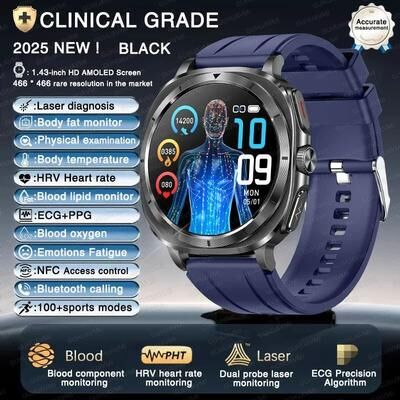
Uplifted Finds 2025 Nursing Health Smart Watch ECG & Uric Acid Body Analysis Executive Blood Lipid & BP Monitoring Suite blue"Inaugurate a powerful ""VitalitySanctuary"" energy in your environment with our most advanced 2025 physiological monitoring solution. This premium Nursing Health Smartwatch is the ultimate designer choice for creating a ""PrecisionModern"" or..."238,97 $*Shipping: 0,00 $Secure redirect to the provider
-
Uplifted Finds 2025 Nursing Health Smart Watch ECG & Uric Acid Body Analysis Executive Blood Lipid & BP Monitoring Suite black"Inaugurate a powerful ""VitalitySanctuary"" energy in your environment with our most advanced 2025 physiological monitoring solution. This premium Nursing Health Smartwatch is the ultimate designer choice for creating a ""PrecisionModern"" or..."238,97 $*Shipping: 0,00 $Secure redirect to the provider
-
Uplifted Finds 2025 Nursing Health Smart Watch ECG & Uric Acid Body Analysis Executive Blood Lipid & BP Monitoring Suite black Leather"Inaugurate a powerful ""VitalitySanctuary"" energy in your environment with our most advanced 2025 physiological monitoring solution. This premium Nursing Health Smartwatch is the ultimate designer choice for creating a ""PrecisionModern"" or..."248,97 $*Shipping: 0,00 $Secure redirect to the provider



-
What is an isometry with non-orthogonal corners?
An isometry with non-orthogonal corners is a transformation that preserves distances and angles, but the corners of the shape are not at right angles to each other. This means that the shape is still congruent to its original form after the transformation, but the angles at the corners are not 90 degrees. Isometries with non-orthogonal corners can include rotations, reflections, translations, and glide reflections. These transformations are important in geometry and can be used to study the properties of shapes and figures. **
-
What is an isometry with non-orthogonal vertices?
An isometry with non-orthogonal vertices is a transformation that preserves distances and angles between points, but the vertices are not at right angles to each other. This means that the shape is still congruent to its original form, but the angles between the edges are not necessarily 90 degrees. Isometries with non-orthogonal vertices can include translations, rotations, reflections, and glide reflections. These transformations are important in geometry and can help us understand the properties of shapes in different orientations. **
-
What is the difference between axonometry and isometry?
Axonometry and isometry are both methods used in technical and engineering drawing to represent three-dimensional objects on a two-dimensional surface. The main difference between the two is that axonometry is a type of parallel projection, where all the lines of the object remain parallel in the drawing, while isometry is a specific type of axonometric projection where the object is represented with equal foreshortening along all three axes. In other words, isometry maintains the same scale in all three dimensions, while axonometry in general does not. **
-
Is the task for isometry with 3 board projections correct?
Yes, the task for isometry with 3 board projections is correct. Isometry refers to a transformation that preserves the distance between points, and using 3 board projections can help to accurately capture the spatial relationships and distances between points in a three-dimensional space. By using multiple board projections, it is possible to ensure that the isometry is accurately represented in the transformation process. **


What is the evaluation of this Faust analysis introduction?
The introduction to the Faust analysis provides a clear and concise overview of the topic, setting the stage for a deeper exploration of the character and themes in the play. It effectively introduces the central themes of ambition, desire, and the pursuit of knowledge, while also hinting at the complexity of the character of Faust. The introduction effectively draws the reader in and creates interest in the analysis that will follow. Overall, it effectively sets the stage for a thoughtful and in-depth exploration of Faust and his story. **
How is the analysis and evaluation of a diagram carried out?
The analysis and evaluation of a diagram is carried out by first examining the components and elements of the diagram, such as labels, symbols, and relationships between different parts. This involves identifying patterns, trends, and any relevant information that the diagram conveys. Next, the diagram is evaluated by considering its accuracy, relevance, and effectiveness in communicating information. This includes assessing whether the diagram effectively conveys the intended message and whether it is clear and understandable to the intended audience. Finally, the analysis and evaluation process may involve comparing the diagram to other sources of information to validate its accuracy and completeness. **
Top-Angebote
Products related to Isometry:
-
Uplifted Finds 2025 Nursing Health Smart Watch ECG & Uric Acid Body Analysis Executive Blood Lipid & BP Monitoring Suite red"Inaugurate a powerful ""VitalitySanctuary"" energy in your environment with our most advanced 2025 physiological monitoring solution. This premium Nursing Health Smartwatch is the ultimate designer choice for creating a ""PrecisionModern"" or..."238,97 $*Shipping: 0,00 $Secure redirect to the provider
-
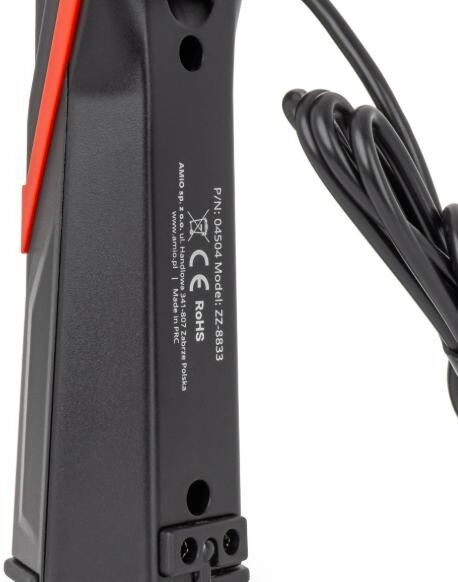
AMiO 04504 Inspection LampBattery: Li-Ion Rechargeable Battery; Features: with rechargeable battery, with charger, magnetic, with hook; Lamp Type: LED; Rechargeable Battery Voltage [V]: 3.7; Light Duration [h]: 2-12; Charging time [h]: 3.5-4; Luminous Flux [lm]: 600, 300, 100; Operating Mode: Battery; Battery Capacity [mAh]: 2600; Mounting Type: Magnet Mount; Cable Length [m]: 0.6; Shock Resistance (IK code): IK07 (up to 2.0J); Connectors/Plugs: USB type-C; Rotation angle [°]: 360; Material: ABS (Acrylonitrile-Butadiene-Styrene Copolymerisate); Protection Type (IP Code): IP2021,99 £*Shipping: 8,45 £Secure redirect to the provider
-
AMiO 04505 Inspection LampBattery: Li-Ion Rechargeable Battery; Light Duration [h]: 2-2.5 hours (1000 lm), 4 hours (500 lm); Features: with rechargeable battery, with charger, magnetic; Charging time [h]: 3.5-4, 2; Lamp Type: LED; Rechargeable Battery Voltage [V]: 3.7; Luminous Flux [lm]: 500, 1000; Operating Mode: Battery; Battery Capacity [mAh]: 4400; Mounting Type: Magnet Mount; Cable Length [m]: 0.6; Shock Resistance (IK code): IK07 (up to 2.0J); Supplementary Info: Motion sensor; Connectors/Plugs: USB type-C; Overcharging protection: Yes; Rotation angle [°]: 18035,49 £*Shipping: 8,45 £Secure redirect to the provider
-
Uplifted Finds 2025 Nursing Health Smart Watch ECG & Uric Acid Body Analysis Executive Blood Lipid & BP Monitoring Suite blue"Inaugurate a powerful ""VitalitySanctuary"" energy in your environment with our most advanced 2025 physiological monitoring solution. This premium Nursing Health Smartwatch is the ultimate designer choice for creating a ""PrecisionModern"" or..."238,97 $*Shipping: 0,00 $Secure redirect to the provider
-
What does isometry mean in art?
Isometry in art refers to the use of geometric shapes and forms that maintain their size and shape regardless of their position or orientation in space. This technique creates a sense of balance, harmony, and stability in the artwork. Isometric art often features precise, straight lines and angles, and is commonly used in architectural drawings, technical illustrations, and graphic design to convey a sense of accuracy and order. **
-
How is a standardized isometry correctly drawn?
A standardized isometry is correctly drawn by following specific guidelines. First, ensure that all three axes (x, y, z) are drawn at 120-degree angles to each other. Next, draw the object or shape in question with accurate proportions and angles, making sure to maintain the 120-degree relationship between the axes. Finally, label the axes and any important points or dimensions to clearly communicate the isometric view. By following these steps, a standardized isometry can be accurately and effectively drawn. **
-
What is an isometry with non-orthogonal corners?
An isometry with non-orthogonal corners is a transformation that preserves distances and angles, but the corners of the shape are not at right angles to each other. This means that the shape is still congruent to its original form after the transformation, but the angles at the corners are not 90 degrees. Isometries with non-orthogonal corners can include rotations, reflections, translations, and glide reflections. These transformations are important in geometry and can be used to study the properties of shapes and figures. **
-
What is an isometry with non-orthogonal vertices?
An isometry with non-orthogonal vertices is a transformation that preserves distances and angles between points, but the vertices are not at right angles to each other. This means that the shape is still congruent to its original form, but the angles between the edges are not necessarily 90 degrees. Isometries with non-orthogonal vertices can include translations, rotations, reflections, and glide reflections. These transformations are important in geometry and can help us understand the properties of shapes in different orientations. **
Similar search terms for Isometry
-
Uplifted Finds 2025 Nursing Health Smart Watch ECG & Uric Acid Body Analysis Executive Blood Lipid & BP Monitoring Suite black"Inaugurate a powerful ""VitalitySanctuary"" energy in your environment with our most advanced 2025 physiological monitoring solution. This premium Nursing Health Smartwatch is the ultimate designer choice for creating a ""PrecisionModern"" or..."238,97 $*Shipping: 0,00 $Secure redirect to the provider
-
Uplifted Finds 2025 Nursing Health Smart Watch ECG & Uric Acid Body Analysis Executive Blood Lipid & BP Monitoring Suite black Leather"Inaugurate a powerful ""VitalitySanctuary"" energy in your environment with our most advanced 2025 physiological monitoring solution. This premium Nursing Health Smartwatch is the ultimate designer choice for creating a ""PrecisionModern"" or..."248,97 $*Shipping: 0,00 $Secure redirect to the provider
-
Uplifted Finds 2025 Nursing Health Smart Watch ECG & Uric Acid Body Analysis Executive Blood Lipid & BP Monitoring Suite brown Leather"Inaugurate a powerful ""VitalitySanctuary"" energy in your environment with our most advanced 2025 physiological monitoring solution. This premium Nursing Health Smartwatch is the ultimate designer choice for creating a ""PrecisionModern"" or..."248,97 $*Shipping: 0,00 $Secure redirect to the provider
-
Uplifted Finds 2025 Nursing Health Smart Watch ECG & Uric Acid Body Analysis Executive Blood Lipid & BP Monitoring Suite black Steel 2a"Inaugurate a powerful ""VitalitySanctuary"" energy in your environment with our most advanced 2025 physiological monitoring solution. This premium Nursing Health Smartwatch is the ultimate designer choice for creating a ""PrecisionModern"" or..."263,97 $*Shipping: 0,00 $Secure redirect to the provider
-
What is the difference between axonometry and isometry?
Axonometry and isometry are both methods used in technical and engineering drawing to represent three-dimensional objects on a two-dimensional surface. The main difference between the two is that axonometry is a type of parallel projection, where all the lines of the object remain parallel in the drawing, while isometry is a specific type of axonometric projection where the object is represented with equal foreshortening along all three axes. In other words, isometry maintains the same scale in all three dimensions, while axonometry in general does not. **
-
Is the task for isometry with 3 board projections correct?
Yes, the task for isometry with 3 board projections is correct. Isometry refers to a transformation that preserves the distance between points, and using 3 board projections can help to accurately capture the spatial relationships and distances between points in a three-dimensional space. By using multiple board projections, it is possible to ensure that the isometry is accurately represented in the transformation process. **
-
What is the evaluation of this Faust analysis introduction?
The introduction to the Faust analysis provides a clear and concise overview of the topic, setting the stage for a deeper exploration of the character and themes in the play. It effectively introduces the central themes of ambition, desire, and the pursuit of knowledge, while also hinting at the complexity of the character of Faust. The introduction effectively draws the reader in and creates interest in the analysis that will follow. Overall, it effectively sets the stage for a thoughtful and in-depth exploration of Faust and his story. **
-
How is the analysis and evaluation of a diagram carried out?
The analysis and evaluation of a diagram is carried out by first examining the components and elements of the diagram, such as labels, symbols, and relationships between different parts. This involves identifying patterns, trends, and any relevant information that the diagram conveys. Next, the diagram is evaluated by considering its accuracy, relevance, and effectiveness in communicating information. This includes assessing whether the diagram effectively conveys the intended message and whether it is clear and understandable to the intended audience. Finally, the analysis and evaluation process may involve comparing the diagram to other sources of information to validate its accuracy and completeness. **
* All prices are inclusive of VAT and, if applicable, plus shipping costs. The offer information is based on the details provided by the respective shop and is updated through automated processes. Real-time updates do not occur, so deviations can occur in individual cases. ** Note: Parts of this content were created by AI.