Buy megachecker.net ?
We are moving the project
megachecker.net .
Are you interested in purchasing the domain
megachecker.net ?
domain@kv-gmbh.de · 0541-91531010
Buy megachecker.net ?
How is the ISS heated?
The International Space Station (ISS) is heated using a combination of methods. The primary source of heat comes from the station's solar panels, which convert sunlight into electricity to power heaters throughout the station. Additionally, the ISS has a complex system of pipes that circulate a special coolant to transfer heat away from sensitive equipment and distribute it to other areas of the station. This combination of solar power and a sophisticated thermal control system helps to maintain a comfortable temperature for the astronauts and keep the station's systems functioning properly in the extreme conditions of space. **
Can I see the ISS?
Yes, the International Space Station (ISS) is visible from Earth and can be seen with the naked eye. The best time to see the ISS is during the early morning or evening when the sky is dark but the sun is still reflecting off the station. You can use websites or apps that track the ISS's location to know when it will be visible from your location. Keep in mind that the visibility of the ISS depends on weather conditions and the station's orbit. **

Similar search terms for Iss
Top-Angebote
Products related to Iss:
-
AMiO 04505 Inspection LampBattery: Li-Ion Rechargeable Battery; Light Duration [h]: 2-2.5 hours (1000 lm), 4 hours (500 lm); Features: with rechargeable battery, with charger, magnetic; Charging time [h]: 3.5-4, 2; Lamp Type: LED; Rechargeable Battery Voltage [V]: 3.7; Luminous Flux [lm]: 500, 1000; Operating Mode: Battery; Battery Capacity [mAh]: 4400; Mounting Type: Magnet Mount; Cable Length [m]: 0.6; Shock Resistance (IK code): IK07 (up to 2.0J); Supplementary Info: Motion sensor; Connectors/Plugs: USB type-C; Overcharging protection: Yes; Rotation angle [°]: 18035,49 £*Shipping: 8,45 £Secure redirect to the provider
-
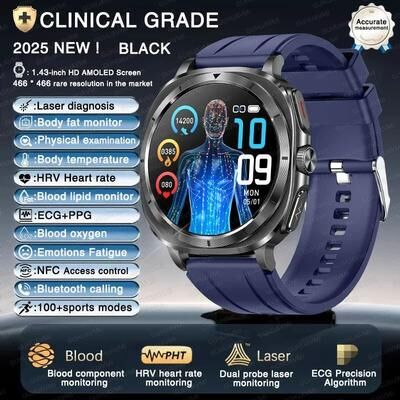
Uplifted Finds 2025 Nursing Health Smart Watch ECG & Uric Acid Body Analysis Executive Blood Lipid & BP Monitoring Suite blue"Inaugurate a powerful ""VitalitySanctuary"" energy in your environment with our most advanced 2025 physiological monitoring solution. This premium Nursing Health Smartwatch is the ultimate designer choice for creating a ""PrecisionModern"" or..."238,97 $*Shipping: 0,00 $Secure redirect to the provider
-
Uplifted Finds 2025 Nursing Health Smart Watch ECG & Uric Acid Body Analysis Executive Blood Lipid & BP Monitoring Suite black"Inaugurate a powerful ""VitalitySanctuary"" energy in your environment with our most advanced 2025 physiological monitoring solution. This premium Nursing Health Smartwatch is the ultimate designer choice for creating a ""PrecisionModern"" or..."238,97 $*Shipping: 0,00 $Secure redirect to the provider
-
Uplifted Finds 2025 Nursing Health Smart Watch ECG & Uric Acid Body Analysis Executive Blood Lipid & BP Monitoring Suite black Leather"Inaugurate a powerful ""VitalitySanctuary"" energy in your environment with our most advanced 2025 physiological monitoring solution. This premium Nursing Health Smartwatch is the ultimate designer choice for creating a ""PrecisionModern"" or..."248,97 $*Shipping: 0,00 $Secure redirect to the provider



-
Is smoking allowed on the ISS?
No, smoking is not allowed on the International Space Station (ISS) due to the confined and controlled environment of the spacecraft. Smoking poses a serious fire hazard and can compromise the safety of the crew and the station itself. Additionally, smoking in space can have negative health effects on astronauts due to the limited ventilation and recycled air on the ISS. **
-
What acceleration does the ISS experience?
The International Space Station (ISS) experiences an acceleration due to the gravitational force of Earth, which is approximately 9.81 m/s^2. This acceleration keeps the ISS in orbit around the Earth, counteracting the force of gravity and allowing it to maintain a constant speed and altitude. Additionally, the ISS may also experience small accelerations due to the effects of atmospheric drag and the occasional thruster firings for reboosting its orbit. **
-
What are facts about the ISS?
The International Space Station (ISS) is a habitable artificial satellite that orbits Earth. It serves as a microgravity and space environment research laboratory where scientific research is conducted in astrobiology, astronomy, meteorology, physics, and other fields. The ISS is a joint project involving multiple countries, including the United States, Russia, Europe, Japan, and Canada. It has been continuously inhabited by astronauts since November 2000, making it one of the longest continuously inhabited human outposts in space. **
-
What forces act on the ISS?
The International Space Station (ISS) experiences several forces while in orbit around the Earth. The primary force acting on the ISS is the gravitational force, which keeps it in orbit around the Earth. Additionally, the ISS experiences a small amount of atmospheric drag due to the thin atmosphere at its orbital altitude. The ISS also experiences forces from solar radiation and the Earth's magnetic field. Finally, the ISS is affected by the occasional thruster firings or reboosts to maintain its orbit. **


Why should the ISS be discontinued?
There are several reasons why the ISS should be discontinued. Firstly, the ISS is aging and requires constant maintenance and repair, which is becoming increasingly costly and time-consuming. Secondly, the ISS has already served its purpose as a platform for scientific research and international collaboration, and it may be more cost-effective to invest in newer space technologies and missions. Lastly, discontinuing the ISS could free up resources and funding for future space exploration endeavors, such as returning to the Moon or sending humans to Mars. **
How does the ISS get internet?
The International Space Station (ISS) gets internet through a communication system that includes a network of Tracking and Data Relay Satellites (TDRS) and high-speed Ku-band communication links. These satellites are in geosynchronous orbit and provide continuous coverage for the ISS as it orbits the Earth. The communication links allow the astronauts on board to access the internet, send and receive emails, and communicate with mission control and their families. The internet connection is essential for the astronauts to conduct research, stay connected with the world, and access necessary information while on the ISS. **
Top-Angebote
Products related to Iss:
-
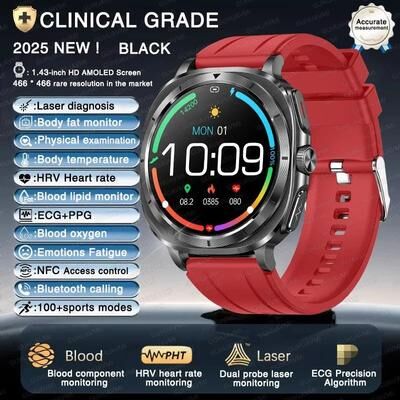
Uplifted Finds 2025 Nursing Health Smart Watch ECG & Uric Acid Body Analysis Executive Blood Lipid & BP Monitoring Suite red"Inaugurate a powerful ""VitalitySanctuary"" energy in your environment with our most advanced 2025 physiological monitoring solution. This premium Nursing Health Smartwatch is the ultimate designer choice for creating a ""PrecisionModern"" or..."238,97 $*Shipping: 0,00 $Secure redirect to the provider
-
AMiO 04504 Inspection LampBattery: Li-Ion Rechargeable Battery; Features: with rechargeable battery, with charger, magnetic, with hook; Lamp Type: LED; Rechargeable Battery Voltage [V]: 3.7; Light Duration [h]: 2-12; Charging time [h]: 3.5-4; Luminous Flux [lm]: 600, 300, 100; Operating Mode: Battery; Battery Capacity [mAh]: 2600; Mounting Type: Magnet Mount; Cable Length [m]: 0.6; Shock Resistance (IK code): IK07 (up to 2.0J); Connectors/Plugs: USB type-C; Rotation angle [°]: 360; Material: ABS (Acrylonitrile-Butadiene-Styrene Copolymerisate); Protection Type (IP Code): IP2021,99 £*Shipping: 8,45 £Secure redirect to the provider
-
AMiO 04505 Inspection LampBattery: Li-Ion Rechargeable Battery; Light Duration [h]: 2-2.5 hours (1000 lm), 4 hours (500 lm); Features: with rechargeable battery, with charger, magnetic; Charging time [h]: 3.5-4, 2; Lamp Type: LED; Rechargeable Battery Voltage [V]: 3.7; Luminous Flux [lm]: 500, 1000; Operating Mode: Battery; Battery Capacity [mAh]: 4400; Mounting Type: Magnet Mount; Cable Length [m]: 0.6; Shock Resistance (IK code): IK07 (up to 2.0J); Supplementary Info: Motion sensor; Connectors/Plugs: USB type-C; Overcharging protection: Yes; Rotation angle [°]: 18035,49 £*Shipping: 8,45 £Secure redirect to the provider
-
Uplifted Finds 2025 Nursing Health Smart Watch ECG & Uric Acid Body Analysis Executive Blood Lipid & BP Monitoring Suite blue"Inaugurate a powerful ""VitalitySanctuary"" energy in your environment with our most advanced 2025 physiological monitoring solution. This premium Nursing Health Smartwatch is the ultimate designer choice for creating a ""PrecisionModern"" or..."238,97 $*Shipping: 0,00 $Secure redirect to the provider
-
How is the ISS heated?
The International Space Station (ISS) is heated using a combination of methods. The primary source of heat comes from the station's solar panels, which convert sunlight into electricity to power heaters throughout the station. Additionally, the ISS has a complex system of pipes that circulate a special coolant to transfer heat away from sensitive equipment and distribute it to other areas of the station. This combination of solar power and a sophisticated thermal control system helps to maintain a comfortable temperature for the astronauts and keep the station's systems functioning properly in the extreme conditions of space. **
-
Can I see the ISS?
Yes, the International Space Station (ISS) is visible from Earth and can be seen with the naked eye. The best time to see the ISS is during the early morning or evening when the sky is dark but the sun is still reflecting off the station. You can use websites or apps that track the ISS's location to know when it will be visible from your location. Keep in mind that the visibility of the ISS depends on weather conditions and the station's orbit. **
-
Is smoking allowed on the ISS?
No, smoking is not allowed on the International Space Station (ISS) due to the confined and controlled environment of the spacecraft. Smoking poses a serious fire hazard and can compromise the safety of the crew and the station itself. Additionally, smoking in space can have negative health effects on astronauts due to the limited ventilation and recycled air on the ISS. **
-
What acceleration does the ISS experience?
The International Space Station (ISS) experiences an acceleration due to the gravitational force of Earth, which is approximately 9.81 m/s^2. This acceleration keeps the ISS in orbit around the Earth, counteracting the force of gravity and allowing it to maintain a constant speed and altitude. Additionally, the ISS may also experience small accelerations due to the effects of atmospheric drag and the occasional thruster firings for reboosting its orbit. **
Similar search terms for Iss
-
Uplifted Finds 2025 Nursing Health Smart Watch ECG & Uric Acid Body Analysis Executive Blood Lipid & BP Monitoring Suite black"Inaugurate a powerful ""VitalitySanctuary"" energy in your environment with our most advanced 2025 physiological monitoring solution. This premium Nursing Health Smartwatch is the ultimate designer choice for creating a ""PrecisionModern"" or..."238,97 $*Shipping: 0,00 $Secure redirect to the provider
-
Uplifted Finds 2025 Nursing Health Smart Watch ECG & Uric Acid Body Analysis Executive Blood Lipid & BP Monitoring Suite black Leather"Inaugurate a powerful ""VitalitySanctuary"" energy in your environment with our most advanced 2025 physiological monitoring solution. This premium Nursing Health Smartwatch is the ultimate designer choice for creating a ""PrecisionModern"" or..."248,97 $*Shipping: 0,00 $Secure redirect to the provider
-
Uplifted Finds 2025 Nursing Health Smart Watch ECG & Uric Acid Body Analysis Executive Blood Lipid & BP Monitoring Suite brown Leather"Inaugurate a powerful ""VitalitySanctuary"" energy in your environment with our most advanced 2025 physiological monitoring solution. This premium Nursing Health Smartwatch is the ultimate designer choice for creating a ""PrecisionModern"" or..."248,97 $*Shipping: 0,00 $Secure redirect to the provider
-
Uplifted Finds 2025 Nursing Health Smart Watch ECG & Uric Acid Body Analysis Executive Blood Lipid & BP Monitoring Suite black Steel 2a"Inaugurate a powerful ""VitalitySanctuary"" energy in your environment with our most advanced 2025 physiological monitoring solution. This premium Nursing Health Smartwatch is the ultimate designer choice for creating a ""PrecisionModern"" or..."263,97 $*Shipping: 0,00 $Secure redirect to the provider
-
What are facts about the ISS?
The International Space Station (ISS) is a habitable artificial satellite that orbits Earth. It serves as a microgravity and space environment research laboratory where scientific research is conducted in astrobiology, astronomy, meteorology, physics, and other fields. The ISS is a joint project involving multiple countries, including the United States, Russia, Europe, Japan, and Canada. It has been continuously inhabited by astronauts since November 2000, making it one of the longest continuously inhabited human outposts in space. **
-
What forces act on the ISS?
The International Space Station (ISS) experiences several forces while in orbit around the Earth. The primary force acting on the ISS is the gravitational force, which keeps it in orbit around the Earth. Additionally, the ISS experiences a small amount of atmospheric drag due to the thin atmosphere at its orbital altitude. The ISS also experiences forces from solar radiation and the Earth's magnetic field. Finally, the ISS is affected by the occasional thruster firings or reboosts to maintain its orbit. **
-
Why should the ISS be discontinued?
There are several reasons why the ISS should be discontinued. Firstly, the ISS is aging and requires constant maintenance and repair, which is becoming increasingly costly and time-consuming. Secondly, the ISS has already served its purpose as a platform for scientific research and international collaboration, and it may be more cost-effective to invest in newer space technologies and missions. Lastly, discontinuing the ISS could free up resources and funding for future space exploration endeavors, such as returning to the Moon or sending humans to Mars. **
-
How does the ISS get internet?
The International Space Station (ISS) gets internet through a communication system that includes a network of Tracking and Data Relay Satellites (TDRS) and high-speed Ku-band communication links. These satellites are in geosynchronous orbit and provide continuous coverage for the ISS as it orbits the Earth. The communication links allow the astronauts on board to access the internet, send and receive emails, and communicate with mission control and their families. The internet connection is essential for the astronauts to conduct research, stay connected with the world, and access necessary information while on the ISS. **
* All prices are inclusive of VAT and, if applicable, plus shipping costs. The offer information is based on the details provided by the respective shop and is updated through automated processes. Real-time updates do not occur, so deviations can occur in individual cases. ** Note: Parts of this content were created by AI.