Buy megachecker.net ?
We are moving the project
megachecker.net .
Are you interested in purchasing the domain
megachecker.net ?
domain@kv-gmbh.de · 0541-91531010
Buy megachecker.net ?
What is the difference between confirmatory factor analysis and exploratory factor analysis?
Confirmatory factor analysis (CFA) is a statistical technique used to test the hypothesis that a set of observed variables measure a set of latent constructs or factors. CFA is used to confirm or validate a pre-existing theory or model of the relationships between the observed variables and the latent constructs. On the other hand, exploratory factor analysis (EFA) is used to explore the underlying structure of a set of observed variables without preconceived hypotheses about the relationships between the variables and the factors. EFA is used to uncover the underlying patterns or structure in the data and to generate hypotheses for further research. In summary, the main difference between CFA and EFA is that CFA tests a pre-existing theory or model, while EFA explores the underlying structure of the data without preconceived hypotheses. **
What is factor analysis in statistics using SPSS?
Factor analysis in statistics using SPSS is a multivariate statistical technique used to identify underlying factors or latent variables that explain the patterns of correlations among a set of observed variables. It helps in reducing the dimensionality of the data by identifying the common underlying factors that explain the relationships among the observed variables. In SPSS, factor analysis involves identifying the number of factors to retain, extracting the factors, and interpreting the results to understand the underlying structure of the data. It is commonly used in fields such as psychology, sociology, and market research to uncover the underlying structure of complex data sets. **

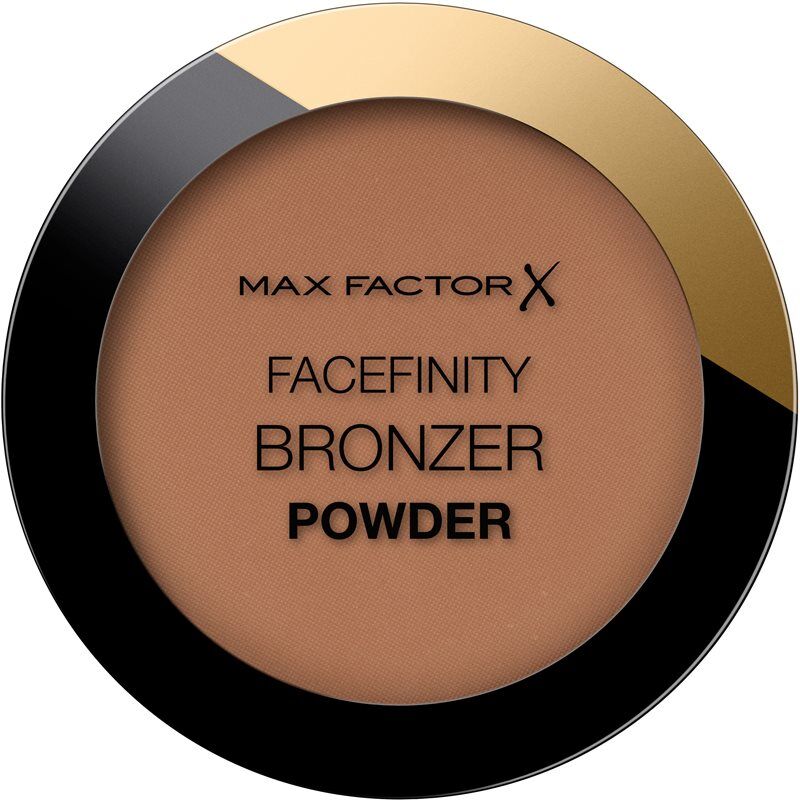
Similar search terms for Max-Factor-Facefinity-powder
Top-Angebote
Products related to Max-Factor-Facefinity-powder:
-
Max Factor Facefinity illuminating powder shade 001 Nude Beam 8 gMax Factor Facefinity, 8 g, Highlighter for Women, Do you feel as though your makeup look is one step away from absolute perfection? If that one step is adding a radiant glow, reach for the Max Factor Facefinity highlighter. With subtle, light-reflecting shimmery pigment, it brightens the complexion and creates a radiant finish wherever you apply it. It allows you to accentuate your facial features, highlighting areas such as your cheekbones, the bridge of your nose or the brow bone. Making your complexion look radiant with health and vitality has never been easier. Characteristics: highlights the face perfectly gently highlights selected parts of the face sparkling effect How to use: Apply to the cheekbones, the upper part of the cheeks, the centre of your face, under the eyebrows and in the inner corners of your eyes to make your face perfectly radiant.6,70 £*Shipping: 3,99 £Secure redirect to the provider
-
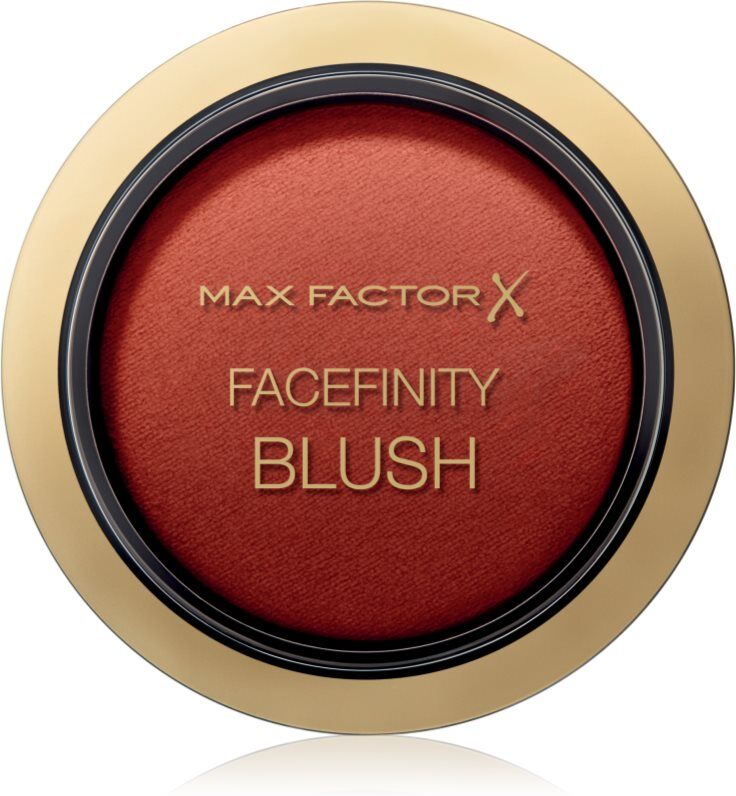
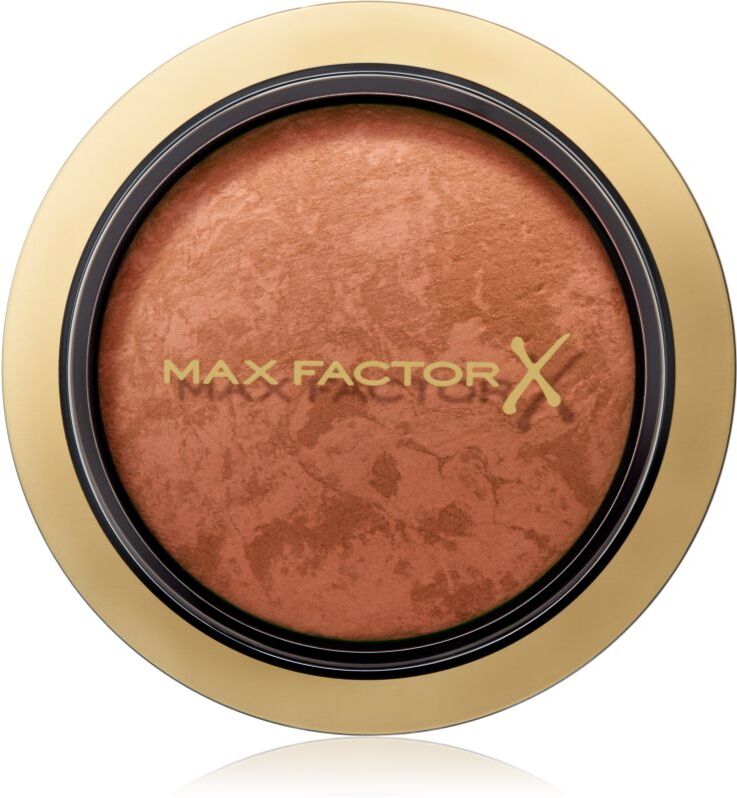
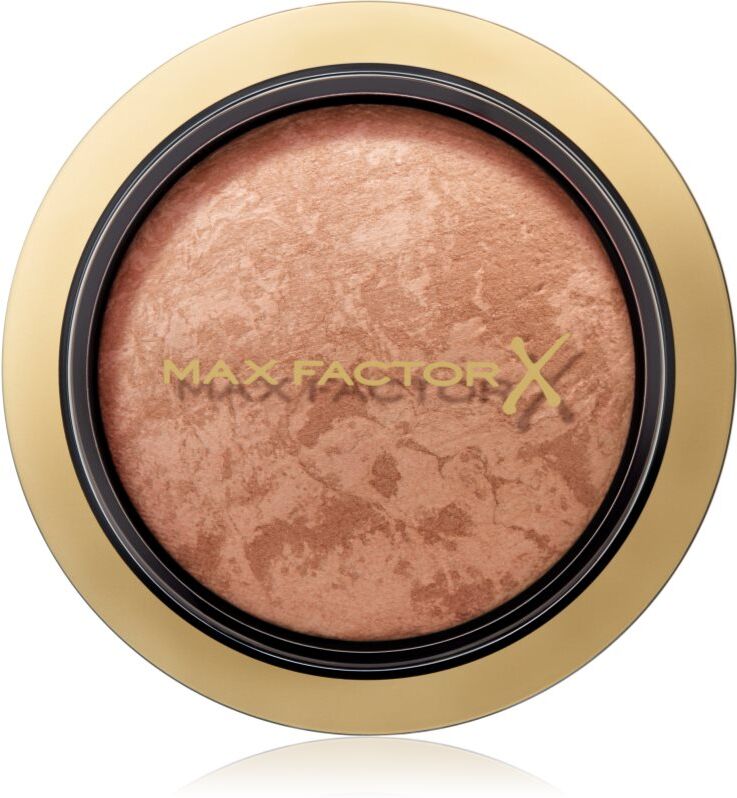
Max Factor Facefinity powder blusher shade 055 Stunning Sienna 1,5 gMax Factor Facefinity, 1.5 g, Blushers for Women, Do you want to give your face a healthy, fresh appearance? The Max Factor Facefinity blusher is here to help. It envelops your cheeks in a soft hint of colour similar to the natural blushing process. But it’s also useful for highlighting features and visually altering the shape of your face, for example when you want your cheeks to appear lifted. Just apply a few layers with a brush or sponge and your cheeks will get a refreshed appearance to enhance any makeup style. Characteristics: brightens easy to use How to use: Apply to the face using a wide brush and blend in.4,08 £*Shipping: 3,99 £Secure redirect to the provider
-
Max Factor Facefinity powder blusher shade 25 Alluring Rose 1,5 gMax Factor Facefinity, 1.5 g, Blushers, Bronzers for Women, Do you want to give your face a healthy, fresh appearance? The Max Factor Facefinity blusher is here to help. It envelops your cheeks in a soft hint of colour similar to the natural blushing process. But it’s also useful for highlighting features and visually altering the shape of your face, for example when you want your cheeks to appear lifted. Just apply a few layers with a brush or sponge and your cheeks will get a refreshed appearance to enhance any makeup style. Characteristics: brightens easy to use How to use: Apply to the face using a wide brush and blend in.4,08 £*Shipping: 3,99 £Secure redirect to the provider
-
Max Factor Facefinity bronzing powder 001 Light Bronze 10 gMax Factor Facefinity, 10 g, Blushers, Bronzers for Women, Do you want your face to look tan even on days when you’re not spending time outdoors or the sun is still hiding behind the clouds? The Max Factor Facefinity bronzer helps you achieve a tanned, sun-kissed look in the comfort of your own home instantly. It provides a subtle tint, making it easy to create a naturally bronzed look. This bronzer also allows you to highlight your facial contours and enhance the shape of your face. Be a bronze goddess whenever you feel like it. Characteristics: the product is also suitable for contouring gives your face a fresh and healthy look visibly smooths and softens the skin How to use: To define the face and emphasise contours, apply along the sides of the forehead, under the cheekbones and to the bottom of the chin and the side of the nose.8,80 £*Shipping: 3,99 £Secure redirect to the provider


-
How can weighting be done in a factor analysis?
Weighting in factor analysis can be done by assigning different weights to the variables based on their importance or relevance to the underlying factors. These weights are used to calculate the factor scores for each observation in the dataset. The weights are typically estimated through methods such as principal component analysis or maximum likelihood estimation. By adjusting the weights, researchers can emphasize certain variables over others in the factor analysis process, leading to a more accurate representation of the underlying factors. **
-
What exactly does an exploratory factor analysis bring me?
An exploratory factor analysis (EFA) brings several benefits to researchers. Firstly, it helps to identify the underlying structure of a set of variables by determining the number of factors and how they are related to each other. This can provide insights into the underlying constructs or dimensions that the variables are measuring. Additionally, EFA can help to reduce the dimensionality of the data by identifying which variables are most important for each factor, making it easier to interpret and analyze the data. Overall, EFA can provide a deeper understanding of the relationships between variables and uncover the underlying structure of a dataset. **
-
How do you factor out a factor?
To factor out a factor from an expression, you need to identify a common factor that can be divided out of each term in the expression. This involves finding the greatest common factor (GCF) of the terms. Once you have identified the GCF, you can divide each term by this factor to simplify the expression. Factoring out a factor helps to simplify the expression and make it easier to work with or solve. **
-
How do you factor out a common factor?
To factor out a common factor from an expression, you need to identify the largest common factor that divides evenly into all terms of the expression. Once you have identified the common factor, you can divide each term by this factor and rewrite the expression as the product of the common factor and the remaining terms. This process simplifies the expression and makes it easier to work with or solve. **

How do I factor out the common factor?
To factor out the common factor in an algebraic expression, you need to identify the largest factor that is common to all the terms. Once you have identified this common factor, you can divide each term by this factor. The result will be the factored form of the expression, where the common factor is outside the parentheses and the remaining terms are inside the parentheses. This process simplifies the expression and makes it easier to work with. **
How do you factor out the greatest common factor?
To factor out the greatest common factor from a polynomial, you first identify the common factors of all the terms in the polynomial. Then, you divide each term by the greatest common factor and write the result as a product of the greatest common factor and the remaining terms. This process simplifies the polynomial and makes it easier to work with. **
Top-Angebote
Products related to Max-Factor-Facefinity-powder:
-
Max Factor Facefinity Powder Compact 05 SandHealth and Beauty Face and Cheeks Max Factor Facefinity Powder Compact 05 Sand Duration of a primer, coverage of a liquid base, matte finish of a compact and long-lasting powder. Step 1: Duration of a primer, coverage of a liquid base, matte finish of a compact and long-lasting powder. Step 2: Apply it around the entire face as a base for a matte finish or as a powder to tint the area of the T zone, leaving the rest of your skin radiant. Step 3: Use the integrated sponge to get more coverage or a brush for a lighter finish. Step 4: Always apply the base with good natural light.9,96 £*Shipping: 3,99 £Secure redirect to the provider
-
Max Factor Facefinity bronzing powder 002 Warm Tan 10 gMax Factor Facefinity, 10 g, Blushers, Bronzers for Women, Do you want your face to look tan even on days when you’re not spending time outdoors or the sun is still hiding behind the clouds? The Max Factor Facefinity bronzer helps you achieve a tanned, sun-kissed look in the comfort of your own home instantly. It provides a subtle tint, making it easy to create a naturally bronzed look. This bronzer also allows you to highlight your facial contours and enhance the shape of your face. Be a bronze goddess whenever you feel like it. Characteristics: the product is also suitable for contouring gives your face a fresh and healthy look visibly smooths and softens the skin How to use: To define the face and emphasise contours, apply along the sides of the forehead, under the cheekbones and to the bottom of the chin and the side of the nose.8,80 £*Shipping: 3,99 £Secure redirect to the provider
-
Max Factor Facefinity illuminating powder shade 001 Nude Beam 8 gMax Factor Facefinity, 8 g, Highlighter for Women, Do you feel as though your makeup look is one step away from absolute perfection? If that one step is adding a radiant glow, reach for the Max Factor Facefinity highlighter. With subtle, light-reflecting shimmery pigment, it brightens the complexion and creates a radiant finish wherever you apply it. It allows you to accentuate your facial features, highlighting areas such as your cheekbones, the bridge of your nose or the brow bone. Making your complexion look radiant with health and vitality has never been easier. Characteristics: highlights the face perfectly gently highlights selected parts of the face sparkling effect How to use: Apply to the cheekbones, the upper part of the cheeks, the centre of your face, under the eyebrows and in the inner corners of your eyes to make your face perfectly radiant.6,70 £*Shipping: 3,99 £Secure redirect to the provider
-
Max Factor Facefinity powder blusher shade 055 Stunning Sienna 1,5 gMax Factor Facefinity, 1.5 g, Blushers for Women, Do you want to give your face a healthy, fresh appearance? The Max Factor Facefinity blusher is here to help. It envelops your cheeks in a soft hint of colour similar to the natural blushing process. But it’s also useful for highlighting features and visually altering the shape of your face, for example when you want your cheeks to appear lifted. Just apply a few layers with a brush or sponge and your cheeks will get a refreshed appearance to enhance any makeup style. Characteristics: brightens easy to use How to use: Apply to the face using a wide brush and blend in.4,08 £*Shipping: 3,99 £Secure redirect to the provider
-
What is the difference between confirmatory factor analysis and exploratory factor analysis?
Confirmatory factor analysis (CFA) is a statistical technique used to test the hypothesis that a set of observed variables measure a set of latent constructs or factors. CFA is used to confirm or validate a pre-existing theory or model of the relationships between the observed variables and the latent constructs. On the other hand, exploratory factor analysis (EFA) is used to explore the underlying structure of a set of observed variables without preconceived hypotheses about the relationships between the variables and the factors. EFA is used to uncover the underlying patterns or structure in the data and to generate hypotheses for further research. In summary, the main difference between CFA and EFA is that CFA tests a pre-existing theory or model, while EFA explores the underlying structure of the data without preconceived hypotheses. **
-
What is factor analysis in statistics using SPSS?
Factor analysis in statistics using SPSS is a multivariate statistical technique used to identify underlying factors or latent variables that explain the patterns of correlations among a set of observed variables. It helps in reducing the dimensionality of the data by identifying the common underlying factors that explain the relationships among the observed variables. In SPSS, factor analysis involves identifying the number of factors to retain, extracting the factors, and interpreting the results to understand the underlying structure of the data. It is commonly used in fields such as psychology, sociology, and market research to uncover the underlying structure of complex data sets. **
-
How can weighting be done in a factor analysis?
Weighting in factor analysis can be done by assigning different weights to the variables based on their importance or relevance to the underlying factors. These weights are used to calculate the factor scores for each observation in the dataset. The weights are typically estimated through methods such as principal component analysis or maximum likelihood estimation. By adjusting the weights, researchers can emphasize certain variables over others in the factor analysis process, leading to a more accurate representation of the underlying factors. **
-
What exactly does an exploratory factor analysis bring me?
An exploratory factor analysis (EFA) brings several benefits to researchers. Firstly, it helps to identify the underlying structure of a set of variables by determining the number of factors and how they are related to each other. This can provide insights into the underlying constructs or dimensions that the variables are measuring. Additionally, EFA can help to reduce the dimensionality of the data by identifying which variables are most important for each factor, making it easier to interpret and analyze the data. Overall, EFA can provide a deeper understanding of the relationships between variables and uncover the underlying structure of a dataset. **
Similar search terms for Max-Factor-Facefinity-powder
-
Max Factor Facefinity powder blusher shade 25 Alluring Rose 1,5 gMax Factor Facefinity, 1.5 g, Blushers, Bronzers for Women, Do you want to give your face a healthy, fresh appearance? The Max Factor Facefinity blusher is here to help. It envelops your cheeks in a soft hint of colour similar to the natural blushing process. But it’s also useful for highlighting features and visually altering the shape of your face, for example when you want your cheeks to appear lifted. Just apply a few layers with a brush or sponge and your cheeks will get a refreshed appearance to enhance any makeup style. Characteristics: brightens easy to use How to use: Apply to the face using a wide brush and blend in.4,08 £*Shipping: 3,99 £Secure redirect to the provider
-
Max Factor Facefinity bronzing powder 001 Light Bronze 10 gMax Factor Facefinity, 10 g, Blushers, Bronzers for Women, Do you want your face to look tan even on days when you’re not spending time outdoors or the sun is still hiding behind the clouds? The Max Factor Facefinity bronzer helps you achieve a tanned, sun-kissed look in the comfort of your own home instantly. It provides a subtle tint, making it easy to create a naturally bronzed look. This bronzer also allows you to highlight your facial contours and enhance the shape of your face. Be a bronze goddess whenever you feel like it. Characteristics: the product is also suitable for contouring gives your face a fresh and healthy look visibly smooths and softens the skin How to use: To define the face and emphasise contours, apply along the sides of the forehead, under the cheekbones and to the bottom of the chin and the side of the nose.8,80 £*Shipping: 3,99 £Secure redirect to the provider
-
Max Factor Facefinity illuminating powder shade 002 Golden Hour 8 gMax Factor Facefinity, 8 g, Highlighter for Women, Do you feel as though your makeup look is one step away from absolute perfection? If that one step is adding a radiant glow, reach for the Max Factor Facefinity highlighter. With subtle, light-reflecting shimmery pigment, it brightens the complexion and creates a radiant finish wherever you apply it. It allows you to accentuate your facial features, highlighting areas such as your cheekbones, the bridge of your nose or the brow bone. Making your complexion look radiant with health and vitality has never been easier. Characteristics: highlights the face perfectly gently highlights selected parts of the face sparkling effect How to use: Apply to the cheekbones, the upper part of the cheeks, the centre of your face, under the eyebrows and in the inner corners of your eyes to make your face perfectly radiant.6,70 £*Shipping: 3,99 £Secure redirect to the provider
-
Max Factor Facefinity powder blusher shade 10 Nude Mauve 1,5 gMax Factor Facefinity, 1.5 g, Blushers for Women, Do you want to give your face a healthy, fresh appearance? The Max Factor Facefinity blusher is here to help. It envelops your cheeks in a soft hint of colour similar to the natural blushing process. But it’s also useful for highlighting features and visually altering the shape of your face, for example when you want your cheeks to appear lifted. Just apply a few layers with a brush or sponge and your cheeks will get a refreshed appearance to enhance any makeup style. Characteristics: brightens easy to use How to use: Apply to the face using a wide brush and blend in.4,68 £*Shipping: 3,99 £Secure redirect to the provider
-
How do you factor out a factor?
To factor out a factor from an expression, you need to identify a common factor that can be divided out of each term in the expression. This involves finding the greatest common factor (GCF) of the terms. Once you have identified the GCF, you can divide each term by this factor to simplify the expression. Factoring out a factor helps to simplify the expression and make it easier to work with or solve. **
-
How do you factor out a common factor?
To factor out a common factor from an expression, you need to identify the largest common factor that divides evenly into all terms of the expression. Once you have identified the common factor, you can divide each term by this factor and rewrite the expression as the product of the common factor and the remaining terms. This process simplifies the expression and makes it easier to work with or solve. **
-
How do I factor out the common factor?
To factor out the common factor in an algebraic expression, you need to identify the largest factor that is common to all the terms. Once you have identified this common factor, you can divide each term by this factor. The result will be the factored form of the expression, where the common factor is outside the parentheses and the remaining terms are inside the parentheses. This process simplifies the expression and makes it easier to work with. **
-
How do you factor out the greatest common factor?
To factor out the greatest common factor from a polynomial, you first identify the common factors of all the terms in the polynomial. Then, you divide each term by the greatest common factor and write the result as a product of the greatest common factor and the remaining terms. This process simplifies the polynomial and makes it easier to work with. **
* All prices are inclusive of VAT and, if applicable, plus shipping costs. The offer information is based on the details provided by the respective shop and is updated through automated processes. Real-time updates do not occur, so deviations can occur in individual cases. ** Note: Parts of this content were created by AI.